
How to Help Children Understand and Cope with a Loved One in Hospice
De qué estamos hablando: Children might experience grief differently than adults in your family when a loved one enters hospice. This guide covers how children grieve, how to talk to them about hospice, how to involve them in the journey, and letting them say goodbye. You don’t have to walk through this alone.
Having a loved one in hospice is a heavy emotional weight for all family and close friends involved, especially children.
As a child watches someone go through the hospice journey, they may struggle to understand what is truly going on. This can lead to more questions that you may have difficulty answering.
It’s important to remember there is no perfect script to prepare children for this process. However, there are thoughtful, age-appropriate ways to guide them.
It’s okay to not have all of the answers for a child. What matters is showing up with honesty and love. In this guide, we will cover general ways that you can prepare a child to cope with a loved one in hospice. From understanding how children grieve to helping them deal with loss, we hope this will give you confidence to have these conversations with them.
How Children Grieve
Children’s brains, personalities, and maturity levels change rapidly as they develop and grow. This also affects how they express and process feelings of grief.
In fact, grief may not always look like sadness. It could manifest in new behaviors like:
- Changes in the way they play by themselves or with others
- Emotional outbursts that are not typical for them
- Withdrawal from normal activities that used to bring them joy
- Clinginess to a person or object that brings them comfort
These are often signs of anticipatory grief. They are expecting something bad to happen to someone they care about, but they may not have the tools to express these emotions at their current age. This is all normal and should be expected.
If you notice any of these signs in your child, reach out to your hospice provider. They can help by providing counseling services from licensed professionals who are skilled in working with kids and teens.
How to Talk to Children About Hospice
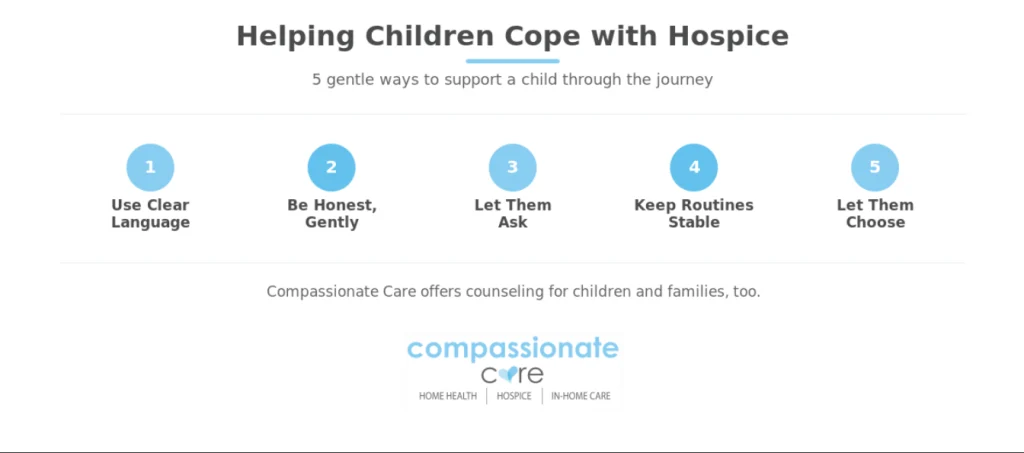
Use Clear and Appropriate Language
Avoid using common euphemisms, such as telling them that their loved one is “going to sleep.” This can only create more confusion or even scare younger kids.
Instead, focus on clear, precise, and age-appropriate language. Explain to them simply what hospice means.
An example of how to explain hospice to a child could be: “Hospice helps keep someone comfortable when they are very sick and are not going to get better.”
Be Honest but Gentle
Share the truth about hospice in manageable pieces. While you do not want to hide the reality, do not overwhelm them with details that they may be afraid of or unable to understand.
Be sure to also validate their emotions. Let them know it is okay to feel sad, angry, confused, or even not much at all. This is where a professional counselor from your hospice provider can help.
Let Them Ask Questions
Depending on age, children often can not grasp death as clearly as an adult. You should expect that they will come to you with questions surrounding hospice and death.
Don’t assume what information they want to know. Rather, let their questions guide the conversation. Provide answers to the best of your ability, and if you cannot answer something, it is okay to say “I don’t know.”
In these moments, it’s best to be as honest as possible with respect to the child’s maturity level. They will appreciate that you took their questions seriously and made an honest effort to answer them.
Involving Children in the Journey
After difficult moments, be fully present with your child. Give them space to talk, cuddle, or simply sit quietly together. Sometimes just your presence can offer comfort.
Children often do best when they feel like their lives remain as stable, balanced, and structured as possible in these difficult moments. Try to maintain their daily routines, as this can help them feel safe and secure during these times.
If they are struggling to communicate verbally, encourage them to express their feelings in other ways. These could include activities like play, drawing, journaling, or storytelling. These activities help to process emotions that they might struggle with putting into words.
As they go through the hospice journey with your family, pay attention to signs of emotional overwhelm. This can include examples such as trouble sleeping, withdrawal, or changes in behavior.
When needed, don’t hesitate to seek support from school counselors, pediatricians, or grief specialists who can provide guidance and care. They can help ensure your child continues to receive the help that they need to continue in their daily routines.
Letting Your Child Say Goodbye
Younger children may not have the emotional maturity or cognitive ability to handle death and grief in the same ways that adults do. Recognizing this, they deserve to decide if, when, and how they say goodbye to a loved one.
Instead of forcing visits, provide the option to join you in seeing your loved one in a hospice setting. Your child may decline the invitation, and that is a normal part of grief. Some embrace last moments, while others may avoid them due to the emotional weight they carry. Neither is “better” than the other.
In these situations, encourage them that their presence, no matter how big or small, does matter. This might encourage them to agree to visiting your loved one more frequently before their passing.
Getting Support for the Whole Family
You and your family do not have to walk through the hospice journey alone. While a major focus of hospice is providing dignified professional care to a patient, a hospice program also supports their families.
At Cuidado compasivo, we understand how children can face unique emotional challenges in these times. With our complete hospice care service in California, we offer professional counseling and support services to families of loved ones that are in hospice or have recently passed after receiving hospice.
If you are seeking hospice for your loved one, please reach out today. Our team will be ready to discuss your options to help you find the right support that you need for both your loved one and your family.
Sigue leyendo
Artículos relacionados
Comienza hoy
Toma el primer paso
con atención compasiva.
Apoyo confidencial y compasivo, a una llamada o un clic de distancia.
Comienza hoy
Cuéntanos sobre las necesidades de tu ser querido y nos pondremos en contacto de inmediato.