
Advance Care Planning: Why Every Family Should Talk About It Early
De qué estamos hablando: Advance care planning ensures loved ones’ wishes are respected. Talking early reduces stress and brings families peace of mind.
Medical emergencies and serious illnesses often arrive unexpectedly. One moment, everything feels stable. Next, you are having more serious and somber discussions with medical providers and family members.
The topic of advance care planning might be uncomfortable. It can be easy to avoid, and understandably so.
However, being willing to have these difficult decisions before serious situations arise can help provide clarity, peace of mind, and confidence for when that time comes. Instead, the focus becomes less on dreading an undesirable outcome and instead more on ensuring your loved one’s issues are honored. It becomes an act of love, clarity, and preparation.
So, What is Advance Care Planning?
Advance care planning is a process of making decisions about future health care in case one becomes unable to communicate. For example, if they are in a coma or lose their ability to speak, they can become reliant on someone else to make decisions that are in line with their wishes.
Examples of advance care planning can include:
- Setting advance directives
- Establishing living wills and trusts
- Naming a healthcare proxy
- Designating a durable power of attorney
This does not only apply to end-of-life situations. This can also apply to loved ones at any stage of life and any level of health. If they are able to collaborate in these decisions, that can help further define their wishes in case these moments do arise so that you can make choices that you know they would want for themselves.
Why Talking About It Early Matters
When a health crisis strikes, families are left trying to make difficult decisions under immense pressure without clear guidance. In turn, this can lead to uncertainty, stress, and disagreements about what care should look like.
Talking about advance care planning early helps avoid these painful moments by giving everyone clarity and peace of mind. Some of the main benefits of having conversations sooner rather than later can include:
- Reducing stress during emergencies: Families don’t have to guess what their loved one would want.
- Preventing conflict: Clear wishes help avoid disagreements between family members.
- Ensuring dignity and comfort: Medical decisions reflect personal values and preferences.
- Allowing flexibility over time: Plans can always be updated as health conditions or wishes change.
By beginning these discussions well before a crisis, you give your loved one the opportunity to make their voice heard and ensure care aligns with what matters most to them.
Key Topics Families Should Cover
When sitting down to discuss advance care planning, there are a few topics that families should focus on. This helps maintain a productive conversation, reduces conflict, and focuses primarily on honoring your loved one to the best of your abilities.
Some of the main areas to cover include:
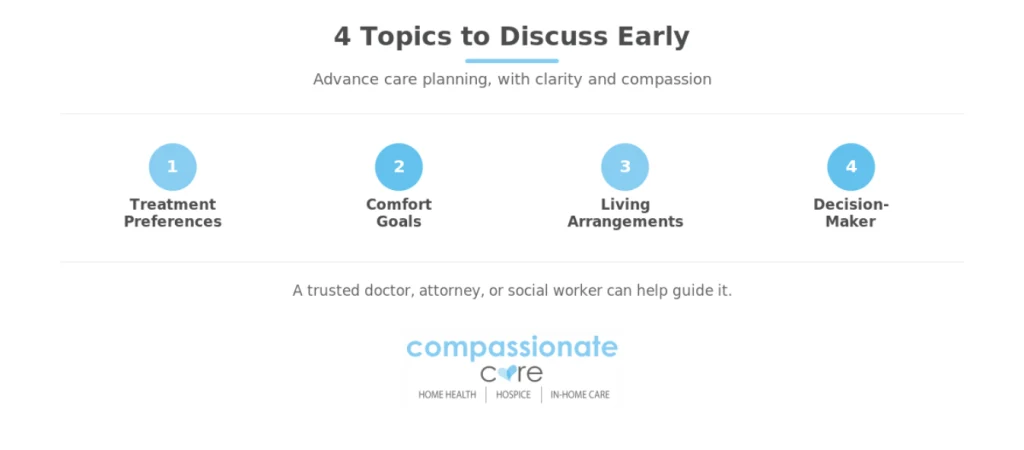
- Treatment preferences: Would your loved one want life-saving interventions such as CPR, ventilators, or feeding tubes, or would they prefer comfort-focused care?
- Comfort goals: How important are things like pain management, emotional support, or spiritual care?
- Living arrangements: Would they prefer to remain at home if possible, or are they open to assisted living or nursing facilities?
- Healthcare decision-maker: Who will act as their healthcare proxy or durable power of attorney to make decisions if they cannot speak for themselves?
Talking through these topics and documenting choices in advance directives or other legal forms can help remove future uncertainty. It also reassures your loved one that their wishes will be honored with respect and dignity.
How to Start the Conversation
Starting a conversation about advance care can be uncomfortable, but it does not have to overwhelm everyone involved. The key is to choose the right moment and approach it with openness and compassion.
A good time to start the conversation is often when life already brings health and family into focus. This might be after a routine doctor’s appointment, during a holiday gathering when everyone is together, or following news of a friend’s illness. It can also feel natural when completing other planning tasks, like updating a will or financial documents, or even after a hospital stay or recovery. Choosing a calm, ordinary moment helps the discussion feel less overwhelming and more like a thoughtful part of everyday life.
Don’t frame it as a heavy or frightening task. Instead, focus on values, preferences, and quality of life. This will also likely be an ongoing conversation, so do not worry about covering every single detail all at once.
Overcoming Common Barriers
Even when families understand the importance of advance care planning, there can still be barriers and objections that arise. You might encounter points raised by other family members such as:
- Fear of upsetting a loved one: Many people worry that talking about future health decisions will cause sadness. In reality, it often brings relief and peace of mind.
- Insisting it’s too early to begin these talks: Planning is valuable at any age, not just when illness appears. Starting early allows flexibility as circumstances change.
- Expressing discomfort about the subject: Cultural or personal beliefs can make it hard to talk about illness or death. Recognizing those feelings while still making space for the conversation is key.
If you would like to introduce someone neutral and objective to guide the conversation in good faith with your loved one’s best interest in mind, you and your family might find it helpful to involve a trusted doctor, nurse, social worker, attorney, or faith leader. Outside support can guide the discussion and make it easier for everyone to participate and share their ideas and preferences.
Supporting Your Loved One Before, During and After Care Decisions Are Made
When difficult medical decisions do arise, you may have to consider comfort-focused care rather than curative treatments. In these moments, having a care team you can rely on can help you face these trials with greater confidence.
At Compassionate Care, our team provides dignified, quality of life-focused home health y cuidados paliativos to individuals and their loved ones in California. To learn more about how we can assist you in navigating this chapter, Contáctanos today.
Sigue leyendo
Artículos relacionados
Comienza hoy
Toma el primer paso
con atención compasiva.
Apoyo confidencial y compasivo, a una llamada o un clic de distancia.
Comienza hoy
Cuéntanos sobre las necesidades de tu ser querido y nos pondremos en contacto de inmediato.