
Be the Loved One and Not the Caregiver: Messages from Those Who Have Been Through It
De qué estamos hablando: Caregivers handle a great deal of responsibilities when caring for someone in hospice. This is a reminder to still be the loved one in these moments, the person they remember and love most. You can still give yourself permission to be you and show up in the hardest times of your loved ones life
When the word “hospice” enters someone’s life, it doesn’t just affect them as a patient – their family feels the weight of it, too. For family members and caregivers, their world can quickly shrink into a series of tasks, fears, uncertainties, and quiet heartbreak.
You might be a spouse, a child, sibling, other family member, or close friend. As you prepare to begin this journey with someone you love, it can feel like you have become a nurse, case manager, or personal assistant.
This isn’t an uncommon experience that many struggle with. It’s common for family caregivers to lose sight of their original role in the rush to care “correctly.”
But you don’t have to do it all. In fact, you shouldn’t do it all. Sometimes, the most important act you can offer is not completing a task. It’s your presence with your loved one who is beginning the end-stage of their life’s journey.
When the Relationship Begins Feeling Like a Job
Is caregiving replacing your family connection? This can lead to feelings you may have never anticipated: resentment, burnout, detachment, and many others.
You may feel guilty about feeling these normal feelings when placed under the stress of caring for your loved one. Coordinating medications, scheduling doctors appointments, and monitoring symptoms can take the place of something as simple as making eye contact when speaking.
This is not a failure, but instead it’s a signal. Your heart is asking for room to breathe, and your mind is seeking a moment to rest.
Your Most Important Job: Being the Loved One
When someone enters hospice, they often want to spend time with the people that they love.
Let’s read that last part again: They often want to spend time with the people they love. They want you as they have always known you more than anything else.
Being a patient’s “loved one” means showing up as you have always been rather than just who you feel responsible to be now. You can do both, but there needs to be a balance.
Let your caregiver-self check vitals and organize medications. Let your loved one-self hold hands and be present. At the end of life, what matters most is not how perfectly things were managed, but how deeply the person you care for feels loved in their last moments.
Simple (but Effective) Ways to Be the Loved One
Everyone’s end-phase of their life’s journey is unique, but there is one universal truth:
When hospice begins, quality of time takes place over quantity of time.
To help you spend more quality time with the person in your life who has begun hospice, here are some effective ways to help you do that:
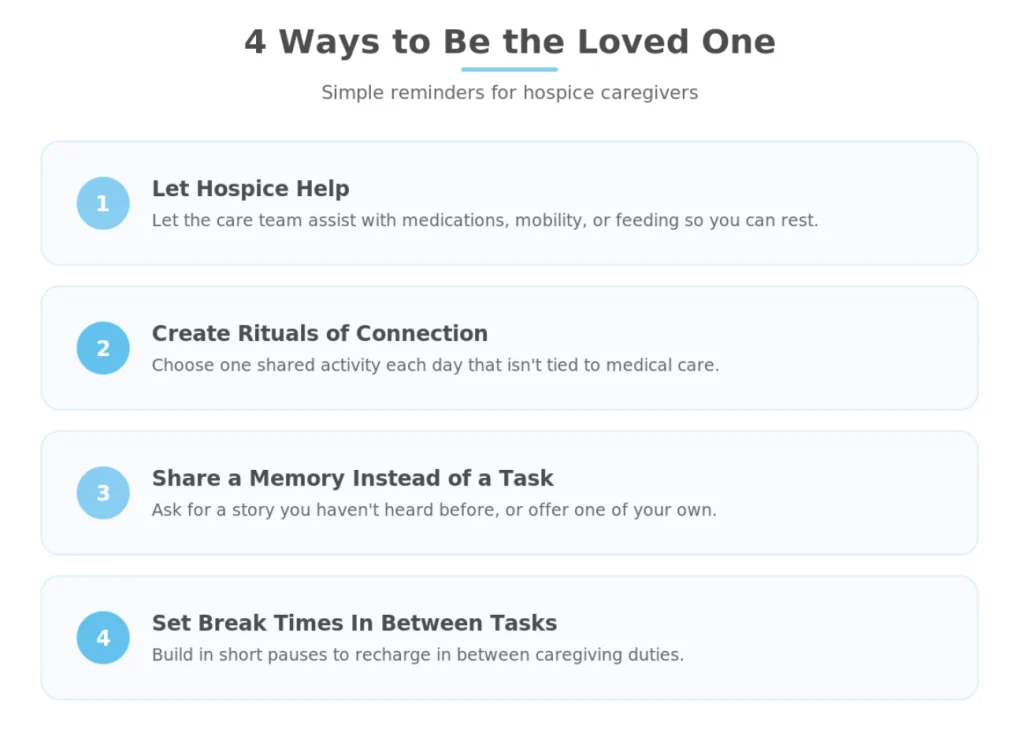
Let Hospice Help
Hospice is a resource intended to support a patient and their family during the final stages of life. This can extend to provide respite to family caregivers that are devoting an incredible amount of time and energy.
Let your loved one’s hospice team assist them when they are available. From managing medications to assisting with mobility or feeding needs, they can provide you a moment to yourself so you can take care of your own needs or even simply relax.
Create Rituals of Connection
Reflect on the relationship you have with the person you’re caring for. In your shared history together, you can likely name at least one activity you mutually enjoyed engaging in.
Choose something each day that connects you both emotionally. Whether it’s watching a movie, playing a game, listening to old music, reading aloud, or anything else that comes to mind, this can be something that you both look forward to that is not tied directly to their medical care. The activity can provide a much-needed emotional relief for both.
Share a Memory Instead of a Task
While performing caregiving tasks, think of ways that you can add another layer of personal connection. For example, you can ask your loved one to tell you a story from their life that they may not have told you before. If they can’t speak, offer to tell them one about yourself.
Set Break Times In Between Tasks
If you are able to, set a specific time between caregiving tasks to allow yourself to catch your breath and relax. This can provide a helpful buffer between your caregiving duties to prevent burnout and allow you to recharge throughout the day.
For example, if you know that your loved one likes to take a nap after their afternoon nurse visit, you can take an hour to yourself to freshen up, watch a show you enjoy, or even enjoy your own quiet rest. You will feel more empowered to manage the caregiving process rather than feeling like it is managing you.
A Message from a Caregiver Who Has Been There
Jenny, who walked through hospice with their mother, Rosa, shared this with our team at Compassionate Care about their own experience with caregiving:
“When my mother, Rosa, entered hospice care, I felt overwhelmed and unsure of what to expect. I wanted to be strong for her, but I was also scared of making the wrong decisions or not doing enough. The Compassionate Care team helped me understand that simply being present—holding her hand, talking with her, and making sure she felt loved—was more than enough.
They supported our entire family, answered every question with patience, and treated my mother with so much dignity and kindness. Hospice gave us the opportunity to focus less on her illness and more on the time we still had together. Although it was one of the most difficult experiences of my life, I will always be grateful that my mother was comfortable, surrounded by love, and cared for with compassion.”
If You’re Struggling with the Pressure of Caregiving
As humans, we value control. When we stop “doing,” we may experience emotions we rather would not, like fear and guilt.
“What if I miss something?”
“If I step back, am I selfish?”
“Will things fall apart if I let go?”
Being the loved one may require moments of gently letting go. It’s choosing to show up in a different, more human way as the person your loved one remembers most fondly. You are not required to be the caregiver alone, and you were never meant to.
Try This Today: Affirm Your Role as the Loved One
Today, give yourself permission to be more than the caregiver. You deserve to be your most true self with your loved one. Hold their hand, look them in the eyes, and say what you want to say to them from your heart.
Love doesn’t come from what you do in the moments you spend with someone you care about. Instead, it comes from you are in them. Let yourself be the person that you are in the moments you are also being the caregiver.
You Don’t Have to be the Caregiver Alone
Are you navigating feelings of fear, uncertainty, and anxiety about caring for a loved one that is considering hospice? You do not have to face this new phase of life alone.
With locations across California, our team at Compassionate Care is committed to providing a complete spectrum of services for hospice patients and their families To learn more about how you can navigate the hospice journey with confidence, empowerment, and dignity, contact us today.
Sigue leyendo
Artículos relacionados
Comienza hoy
Toma el primer paso
con atención compasiva.
Apoyo confidencial y compasivo, a una llamada o un clic de distancia.
Comienza hoy
Cuéntanos sobre las necesidades de tu ser querido y nos pondremos en contacto de inmediato.