
Caring for a Terminally Ill Loved One? Here’s How to Avoid Caregiver Burnout
De qué estamos hablando: Caregiver burnout can be all too common, but with the right steps to protect your peace and energy, it can be prevented. Lean on the support available to you. There is no shame in doing so.
The decision to care for someone you love who is facing a terminal illness is an incredible act of love and self-sacrifice for the care, comfort, and dignity of another. But caregivers are human beings, too. We all face times where we’re exhausted or burnt out.
Between ensuring your loved one’s comfort, attending to their needs, arranging their doctors’ appointments, and managing medications, approaching burnout can happen gradually, and then suddenly it arrives. Burnout is normal, it’s nothing to be ashamed of, and thankfully it can be prevented in many cases with the right tools.
It is important to state that feeling burnt out does not mean that you are doing something wrong. You deserve support as the caregiver, too, and you don’t have to do this alone.
When Love Feels Like a Burden
Oftentimes, caregivers feel immense pressure to give every part of themselves to the one that’s receiving care. If they are not 100% selfless and wholly devoted to their loved one at all times, then that means they are doing something wrong or are failing in their role.
Combine that with feelings of anticipatory grief, and that pressure can multiply. On top of tending to their needs, you are also dealing with complex emotions surrounding mourning someone who is still with you.
In these moments, remember that:
- It is okay to wish for a break
- It is okay to cry in the car
- It is okay to admit caregiving is harder than you imagined
Your grief, your suffering, and anything else you might feel does not diminish your love for the person you’re caring for. You are still committing an incredible act of love for that person, and you are human. Everyone needs and deserves a break at times.
4 Tangible Ways to Protect Your Health and Energy
The best way to prevent burnout is to recognize when the feelings that lead to burnout are mounting. When you notice these signs, take the steps that you can to protect your peace of mind, your energy, and your own physical health.
Here are some ways that you can accomplish this:
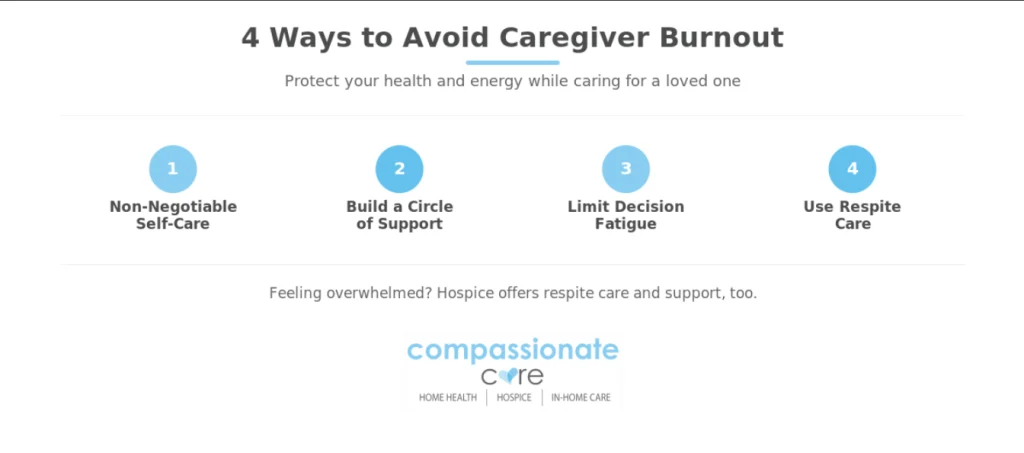
1: Set a Baseline of Non-Negotiable Self-Care
You deserve time to care for yourself while you’re also caring for someone else. Set rules that you follow for yourself in your day-to-day activities to ensure that you are in the best shape to be there for your loved one.
Non-negotiable self-care can look like:
- Eating actual meals instead of just snacks or leftovers
- Making sure you are drinking enough water throughout the day
- Sticking to a steady routine of personal hygiene
- Spending time outside daily, even if it’s just a five-minute walk
- Keeping up with your own medical appointments and medication
- Sticking to a set sleep schedule, barring any medical emergencies
Make a list of what self-care looks like to you, and stick to it. This will also help keep your schedule more routine, balanced, predictable, and it will give you the energy that you need to continue providing care while avoiding burnout.
2: Create a Circle of Support
You do not have to be a caregiver alone. With the right circle of support, you can share the load with others who care about you and want to help you. If a friend or family member ever says “let me know how I can help,” trust that they do want to assist you in some way.
Choose one trusted friend or close family member to check in with daily. They can provide emotional support, encouragement, or just be someone to vent to when the days are tough.
You can also arrange for a backup caregiver for times where you need to be away from home. Ask someone that you trust, such as another family member, to stay with your loved one for a period of time 1-2 times per week. This can give you the freedom to care for yourself with the peace of mind that someone reliable is staying with your loved one.
Finally, there is the practical side of receiving support from others. If someone is willing to help, ask for help in a clear, tangible way. Examples could be:
- “Can you bring dinner on Tuesday?”
- “On your way over, can you stop at the pharmacy for me and pick up this prescription?”
- “If I give you my card and a shopping list, would you mind running out to get groceries for me?”
These all have clear actions associated with them, and they can help free up your time to relax and avoid burnout. It is okay to take someone up on their offer to help if they are someone you know, love, and trust. You do not have to be the one that does everything.
3: Limit Decision Fatigue
When you’re approaching burnout, even a simple decision can feel like an impossible task. From deciding what to eat for dinner to choosing what to wear in the morning can stop you in your tracks or exhaust you mentally. This is called decision fatigue.
To help avoid decision fatigue, try delegating tasks that you do not need to absolutely do yourself. For example, ask someone to do your grocery shopping or use a grocery delivery app to save the time spent at the supermarket.
Also, try to keep routines as simple and predictable as possible so that you can get into a steady rhythm. You can try setting out your clothes for the day the night before, arranging medications in a pillbox with a space for every morning and evening of the week, or even committing to a consistent mealtime every day.
4: Use Respite Care without Guilt
Respite care is a service provided through hospicio where an experienced, qualified professional caregiver will spend time with your loved one in your place. This enables you to use more time to leave home, run errands, spend leisure time by yourself or with others, and to ultimately just do what you love.
There is no shame in respite care. It exists for a reason, and that reason is that burnout is a common problem many caregivers face when they are overwhelmed. A respite care professional is there to provide that needed support so that you can enjoy a period of autonomy to tend to your own needs.
Identifying a Burnout Crisis and When to Ask for Help
There is a quiet, powerful strength in knowing when you’ve reached your limit. It doesn’t mean you’re weak. It means you’re aware, and that awareness can keep both you and your loved one safe.
In some cases, burnout can become extreme. These are called crisis points: where the caregiver and/or care recipient are in danger as a result of overwhelming burnout with no sense of relief in sight.
Recognizing the warning signs of burnout can empower you to take the steps to seek professional help from a qualified professional who provide support without judgment. Signs to look out for as a caregiver include:
- You’re having thoughts of harming yourself or feeling like you can’t go on
- You’re experiencing panic attacks, severe anxiety, or constant emotional numbness
- You feel dangerously exhausted; so much so that you’re afraid you might fall asleep while caring for your loved one or make a serious mistake
These are moments that should never be ignored. If any of the above apply to you, please speak to someone today. Mental health support can be provided by hospice if needed. In emergency situations, here are some free resources you can call:
- 911 for any physical emergencies
- 988 for the Suicide and Crisis Lifeline
- 1-800-662-HELP (4357) for Substance Abuse and Mental Health Services Administration (SAMHSA) for substance abuse or mental health concerns
You do not have to do this alone, and help is available. If you feel you are approaching a burnout crisis, please take a minute to step back, breathe, and reach out to support services. These are confidential and designed to assist you in these moments.
Support Yourself with the Right Hospice Care
You do not have to walk through these moments alone as a caregiver. Help is all around, and burnout can be prevented. It is normal and noble to reach out for support as a caregiver, because it allows you to be the best version of yourself for your loved one. Protecting your peace and energy is part of that.
If you are seeking hospice care for your loved one in California, please reach out to our team at Compassionate Care today. Serving communities from Stockton to Bakersfield and everywhere in between, we want to support you and your loved one as you go through this journey together.
Sigue leyendo
Artículos relacionados
Comienza hoy
Toma el primer paso
con atención compasiva.
Apoyo confidencial y compasivo, a una llamada o un clic de distancia.
Comienza hoy
Cuéntanos sobre las necesidades de tu ser querido y nos pondremos en contacto de inmediato.