
Signs a Loved One is Nearing the End of Life: What to Expect and How to Cope
De qué estamos hablando: Watching a loved one near the end of their life is never easy. We cover the physical and emotional signs someone is nearing death, how to prepare for when this happens, and how you can receive support before and after they have passed.
Watching a loved one decline at the end of their life can feel like time stopping. Days grow longer as you cope with uncertainty, exhaustion, and grief; even if you try to shield these emotions from that person. You may find yourself seeking answers to better understand what is happening and still trying your best to do the right thing in the midst of a heartbreaking time.
However, this is not a journey you need to walk alone.
From family to close friends, your community, and professional services like hospice care, you have a foundation of support that you can lean on. As a hospice care provider, we are here to walk alongside you as you navigate what’s next.
This guide is meant to help you recognize some of the signs that the end may be near, to prepare you emotionally and practically, and to remind you that your presence is powerful, even when words fail.
Physical Signs the End May Be Near
The unfortunate reality is that hospice is provided to patients and their families who know that the end is approaching. As the body begins the end-stage of life, there are often clear signs.
It is important to know that these signs are part of the natural dying process. They are not emergencies or are they indicators that you have done anything wrong.
Common signs of someone’s body dying might include:
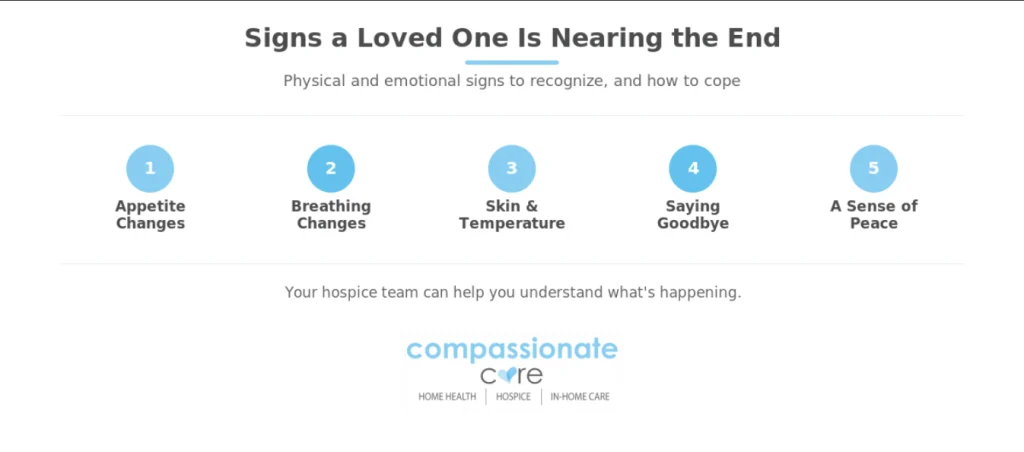
- Decreased appetite and thirst: The body requires less resources for energy as it prepares to die. At this stage, trying to force food or drink could cause more discomfort. Ask your loved one if they are hungry or thirsty around mealtimes or when you perform a routine check, but if they say they are okay, it is not abnormal or alarming if their appetite or thirst is more sparse than your own.
- Changes in breathing: Breathing may become irregular, shallow, or include pauses. Some people develop what’s called a “death rattle,” which is a rattling sound in the throat caused by relaxed muscles and fluid buildup. It can sound distressing, but it is not painful. Hospice staff can help manage this with repositioning or medication if needed.
- Body temperature and color changes: Your loved one’s body may feel colder and appear more mottled or bluish. This is due to changes in circulation and is normal.
- Increased sleeping or unresponsiveness: Your loved one may sleep more and respond less to your touch, voice, or other stimuli in the room. This does not mean they can’t hear you. In fact, hearing is one of the last senses to go.
- Cognitive and functional changes: Your loved one also may experience cognitive changes, incontinence, or produce less urine. These are common and they are manageable. A hospice team can help you manage these changes with skillful care while preserving your loved one’s dignity.
If you are unsure whether or not these signs are beginning to show, you can always reach out to your loved one’s physician or hospice provider with questions. They can provide you with a professional, personalized opinion specific to their case.
Emotional Signs the End is Nearing
The end-stage of life is not only physical but also emotional and spiritual. When faced with such finality, a hospice patient may turn inward and signal readiness in quieter ways, such as:
- Saying goodbye by explicitly communicating this message to loved ones or slowly withdrawing. There’s no “right” way to do this and each person handles it in their own way.
- Symbolic language or restlessness, like saying they are ready to “go home,” or saying they have seen loved ones who have passed. Try to listen gently without explaining or correcting.
- Expressing peace or readiness, while hard to hear, can be a sign that they have accepted their circumstances and are prepared to conclude their life’s journey.
- Spiritual experiences, religious or otherwise, such as speaking of things that you cannot hear or see. These experiences often bring a sense of comfort, and you can support your loved one in these moments by reaching out to a hospice chaplain or a counselor to support them further.
How to Be Present and Cope
Your presence, calm, touch, and love matter more than you may realize. You do not need to have the right words. Sitting quietly, holding a hand, or simply being near your loved one can bring comfort.
If you want to speak, simple phrases like “I love you,” “Thank you,” or “You can go when you’re ready” can mean a great deal. There is no script. What matters is that your words come from the heart.
Gentle touch can also bring peace. Stroking hair, holding hands, or placing your hand on theirs can be soothing, if your loved one is comfortable with it.
While you care for them, please care for yourself, too. It is okay to step away, to cry, or to feel overwhelmed. Hospice is here for you as well, with support, guidance, and someone to talk to when you need it.
What Happens When Death Occurs
Often, the moment of death is quiet. It can feel like the air has left the room. A pin dropping could sound like fireworks.
Physically, breathing stops and the body relaxes, and the eyes may remain open. These are all natural and normal parts of the process and did not cause pain to the person who passed.
If your hospice nurse is not already present, call your hospice provider or 911. They will guide you on what to do next, such as contacting a funeral home to arrange after-death care.
You do not need to rush this. Take your time to say goodbye and receive as much closure as possible.
Seeking Support After Death
While hospice’s primary goal is to provide dignified comfort and care to your loved one as they prepare to die, hospice also exists to support a person’s loved ones and to show them they are not alone.
Grief does not begin at the funeral. It begins with every hard day leading up to it, and it does not end after a loved one passes. That’s why your hospice provider will continue to support you with services such as bereavement support, grief counseling, and continued guidance.
If you are seeking hospicio for your loved one in California, contact our team at Compassionate Care today. From Stockton to Bakersfield, we support families in navigating one of the toughest moments in their lives with care, professional support, and the respect for your loved one’s legacy in mind.
Sigue leyendo
Artículos relacionados
Comienza hoy
Toma el primer paso
con atención compasiva.
Apoyo confidencial y compasivo, a una llamada o un clic de distancia.
Comienza hoy
Cuéntanos sobre las necesidades de tu ser querido y nos pondremos en contacto de inmediato.