
Nutrition Tips for Seniors in Home Health or Hospice Care
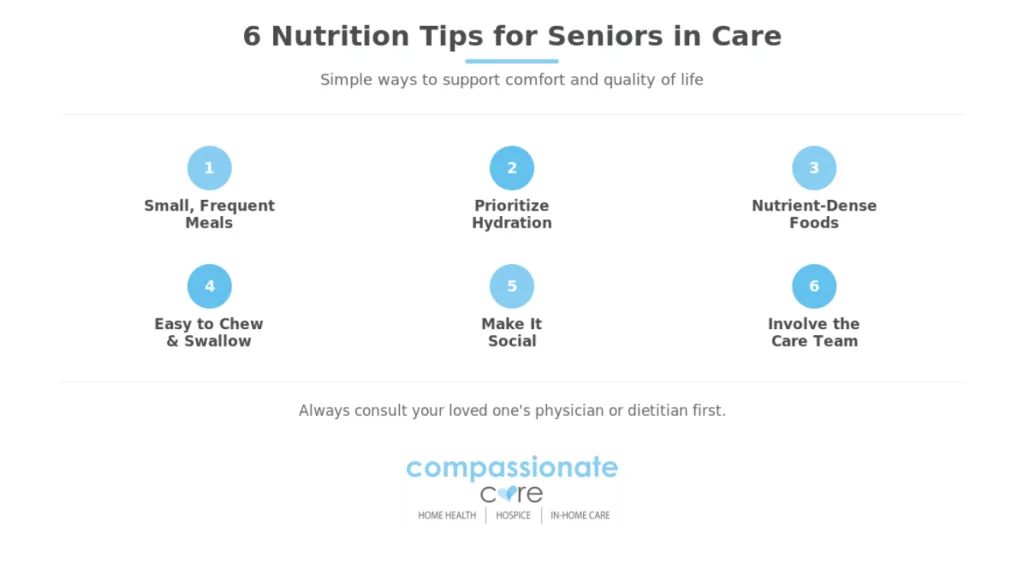
What We’re Talking About: Simple nutrition tips that can benefit seniors’ health, wellbeing, and quality of life while they are receiving home health or hospice care.
Seniors receiving home health or hospice care can face unique nutritional challenges related to their healthcare journeys. These difficulties that that they may experience can include:
- Loss of appetite
- Difficulty swallowing
- Medication side effects
- Chronic health conditions that affect nutritional absorption, appetite, and swallowing
Depending on the specific symptoms your loved one faces, there are options that can assist them in receiving the proper nutrition in a way that is more convenient or doable for them. With thoughtful adjustments, seniors can enjoy meals that nourish the body and uplift the spirit.
Good nutrition supports their comfort, strength, and quality of life, and it should not be overlooked. Today, we are going to cover some basic tips that your loved one can practice to support their overall wellbeing, even when dealing with a serious or terminal illness.
An Important Note on Nutrition
Before we continue with this guide, it should be stressed that this is not universal nutrition advice for all individuals and their unique medical journeys. If you are interested in putting any of these tips into practice for yourself or a loved one, consult your physician for personalized advice and recommendations.
Your hospice or home health team may also be able to refer you to a nutritionist that could be covered as part of the care program. This will help further personalize your loved one’s diet so that they can maximize their quality of life while receiving treatment.
Tip 1: Focus on Small, Frequent Meals
For many undergoing hospice or home healthcare, their appetite can vary and they may not be able to handle larger meals at a time. Instead, break up eating into a higher number of smaller meals throughout the day.
Many Americans eat at a standard 3-meal schedule: Breakfast, lunch, and dinner. For someone who would benefit from smaller meals, encourage eating every 2-3 hours instead. Some ideas for smaller meals can include:
- Mini-sandwiches
- Smoothies
- Yogurt cups
- Soft-cooked vegetables
As you’re serving your loved one meals throughout the day, try to incorporate a good balance of macronutrients throughout. Some meals may be more protein-heavy, others with higher carbohydrates. Remember to keep everything as balanced and nutritious as possible.
Tip 2: Prioritize Hydration
Many seniors don’t feel thirst as strongly. This can result in a higher risk of dehydration.
When planning meals, suggest hydrating foods like:
- Soups
- Fruit with higher water content (watermelon, strawberries, cantaloupe, etc.)
- Gentle beverages (herbal teas, flavored water, etc.)
You also will want to watch for signs of dehydration your loved one might be exhibiting. These can include dry mouth, dizziness, and confusion.
Lastly, and most importantly, it is worth noting that caregivers should consult with a loved one’s hospice or home healthcare team about fluid restrictions if heart or kidney conditions are present. This will help avoid complicating medical care and ensure healthier organ function.
Tip 3: Choose Nutrient Dense Foods
Because seniors often eat smaller portions, maximizing nutritional value is essential. Nutrient-dense foods help the body receive essential vitamins, minerals, and protein without requiring large meals.
When planning meals, consider adding options such as:
- Protein sources like eggs, fish, beans, or Greek yogurt.
- Calcium-rich foods such as dairy products or fortified milk alternatives.
- Fruits and vegetables that are soft-cooked, blended, or pureed for easier digestion.
- Wholesome grains like oatmeal or soft whole-grain bread.
Making meals nutrient-dense doesn’t have to be complicated. Simple dishes like scrambled eggs with vegetables, a smoothie with protein powder, or oatmeal topped with fruit can provide balanced nutrition in an easy-to-eat form.
When planning meals, also be sure to always take into account your loved one’s preferences and dietary restrictions. By tailoring meals to what they enjoy and can safely consume, caregivers can encourage better eating habits and maintain stronger health.
Tip 4: Adjust for Swallowing or Chewing Difficulties
Many seniors face challenges with chewing or swallowing due to dental issues, stroke, Parkinson’s disease, or other health conditions. Making meals easier to chew and swallow both supports nutrition and also helps prevent discomfort and reduces the risk of choking.
When preparing meals, consider offering foods such as:
- Soft and moist dishes like mashed potatoes, scrambled eggs, or well-cooked pasta.
- Pureed soups and stews that combine flavor with an easy-to-consume texture.
- Smoothies and shakes made with fruits, yogurt, or protein powder for added nutrients.
- Ground meats with sauces that are tender and less likely to cause difficulty.
Caregivers should also take portion sizes and textures into consideration and adjust them based on what is safe and comfortable for their loved one. In some cases, a healthcare provider, dietitian, or speech-language pathologist may recommend specific food consistencies or thickened liquids for safety.
5: Make Eating Enjoyable and Social
Few social activities are as universal across cultures and generations as sharing a meal together. When someone is facing challenges like limited mobility or needing to be in or near their homes at all times, this can limit their ability to enjoy meals with others.
Be sure to offer to share at least one meal with your loved one each day. You can also encourage their friends and family members to join as well. This can be done in-person, or even virtually if friends and family live further away and cannot travel easily to visit.
Finally, be sure to treat it like a proper meal time. Set out place settings, silverware, drinkware, and you can even incorporate other enjoyable aspects like their favorite music or family recipes that are familiar to them.
6: Collaborate with Healthcare Providers
As we mentioned above, consulting with healthcare providers is essential to putting any nutrition tips into practice. You can also collaborate with these professionals actively to best support your loved one’s health and wellbeing.
Be sure to involve them in the process. Communicate your loved one’s favorite foods, beverages, and snacks. This can give them insight to offer advice on regulating portions, selecting healthier alternatives with similar taste, and suggest other foods to add that might be missing from their usual eating habits.
Get More Nutritional Advice for Your Loved One in California
If you are looking for more personalized advice to assist your loved one in their hospice or home healthcare journey, nutrition or otherwise, contact our team at Compassionate Care today. We will help you navigate the complexities of your loved one’s treatment while ensuring they maintain a nutritious, highly dignified lifestyle focused on maximizing quality time while receiving their care.
Keep Reading
Related articles
Get Started Today
Take the first step
with compassionate care.
Confidential, compassionate support, one call or click away.
Get Started
Tell us about your loved one's needs and we'll reach out right away.