
Essential Questions to Ask When Hiring a Home Health Care Provider
When you’re choosing the right home health care provider, this is never a decision that should be taken lightly. You are inviting a team into your loved one’s most familiar and intimate space with the goal of ensuring their comfort, wellbeing, and dignity. Having the right team in your corner can make an incredible difference in treatment quality.
To help you decide on who you should hire, we are going to cover some essential questions that you should ask when interviewing the providers that you are considering.
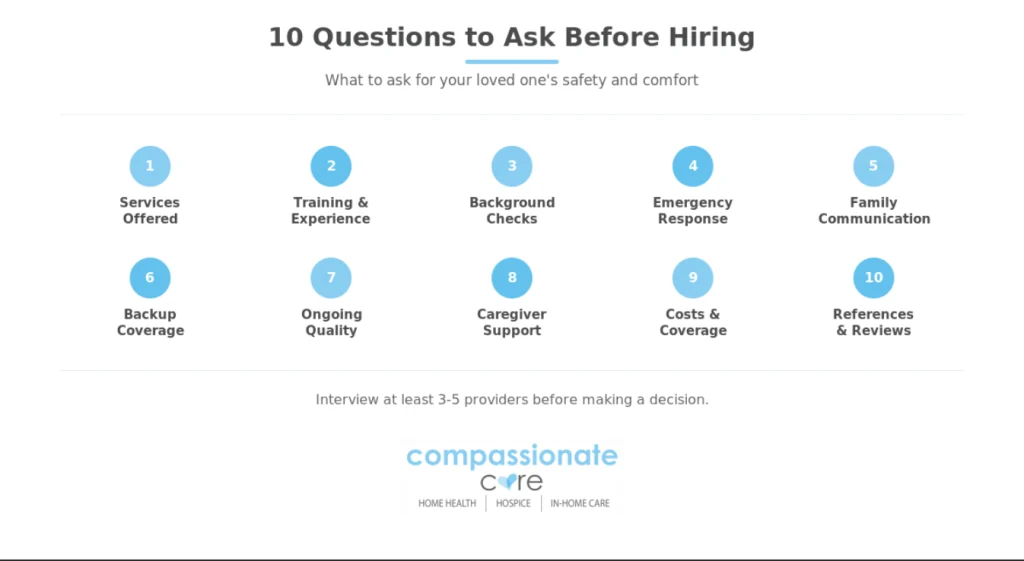
1: What Services Do You Provide?
Home health services cover a vast range of care. Some families need help with bathing, dressing, and meal preparation. Others require skilled nursing, physical therapy, or medication management. Your loved one deserves a complete range of treatments that they require to live the most fulfilling life possible.
Asking this upfront ensures the provider is equipped to handle your loved one’s specific needs. Be clear about what you’re looking for; whether it’s help with daily living, companionship, specialized medical care, or a mix of all three. A trustworthy provider won’t hesitate to outline exactly what’s included and where they may need to bring in additional support.
2: What Training, Certifications, or Experience Do Your Caregivers Have?
Credentials matter. If your loved one has dementia, diabetes, or mobility challenges, you’ll want a caregiver trained to handle those situations safely. For agencies, ask what qualifications they require of staff and how they match caregivers to recipients.
Beyond pieces of paper, though, experience is equally important. Has the caregiver worked with a patient that had similar needs to your loved one? Do they seem to understand the emotional side as well as the technical side of caregiving? The right combination of training and lived experience helps ensure your family member receives both competent and empathetic care.
3: How Do You Screen and Background-Check Caregivers?
Inviting someone into your home is personal, and it can even be a matter of safety if an untrustworthy person is invited into something as intimate as caring for your loved one. You have every right to know how thoroughly a home health provider’s staff has been vetted.
Ask questions like:
- Do you perform background checks?
- Are references checked and verified?
- Do you conduct drug screenings or health clearances?
An agency or caregiver should be transparent about their process. If answers are vague or defensive, that’s a red flag. Safety and trust should be non-negotiable.
Remember, you never have to hire the first provider that you interview. Speak with at least 3-5 options, take notes, and compare them. You can also consider seeking referrals from your loved one’s physicians, which may help reduce some uncertainty.
4: How Do You Handle Emergencies?
Even with the agencies that are “best on paper,” emergencies can happen, such as falls, sudden illness, medication reactions. What matters is how prepared a caregiver or agency is to respond.
To better understand how a provider can handle emergencies, ask them about their staff’s:
- Training in CPR and first aid
- Step-by-step protocols for medical emergencies
- How quickly supervisors or backup caregivers can be reached
A strong provider will have clear procedures in place and will reassure you that your loved one won’t be left vulnerable in a crisis. This will help provide you with greater peace of mind that you can entrust your loved one into their care and that they will continue to be supported in events where extreme circumstances may happen.
5: How Do You Communicate With Families?
Good caregiving is not just one person providing care in isolation. Instead, it’s a team effort that exists between the provider and your loved one’s family. When both work together, the quality of care increases significantly.
Some questions to ask regarding communication include:
- How will updates about your loved one’s health be shared?
- Will you receive written notes after each shift?
- Will there be phone calls after medical appointments?
- Will there be a digital log of care provided?
- Who are the primary points of contact? Is there a supervisor that you can also call if concerns arise?
Consistent, clear communication gives families peace of mind and ensures nothing slips through the cracks. It will also help prevent misunderstandings and keep everyone aligned.
6: What Is Your Backup Plan If a Caregiver Can’t Make It?
Professional caregivers are people, too, and they are subject to the same unpredictable aspects of life. They could experience an illness, have car trouble, or need to call out for their own sudden family emergency.
Life happens for everyone, but what matters is that your loved one is not left without care when these situations do occur.
Ask providers how they handle scheduling gaps with questions like:
- Do they have backup staff?
- How much notice will you receive if someone cancels?
- Will they send someone new, and if so, how will that person be introduced to your loved one?
Reliability isn’t just about showing up every day. It’s also about having systems in place to handle the unexpected. You have the right to know how these situations will be handled by a provider if and when they do come up.
7: How Do You Ensure Quality of Care Over Time?
The best care doesn’t just begin strong. It stays strong. Still, even with highly qualified professionals, burnout can still happen. Humans also have a natural tendency to want to maintain a status quo over time as situations become comfortable.
While some individuals may benefit from consistent, status quo care, there are others whose needs evolve more rapidly and dynamically. Ask how the provider monitors quality with questions like:
- Are supervisors making regular check-ins or home visits?
- Is there a process for families to give feedback or request changes?
- How do they address concerns if something isn’t working?
Caregiving isn’t static. Your loved one’s needs may change, and the provider’s role should adapt along the way.
8: How Are Caregivers Supported and Supervised?
Caregiving is demanding work. Burned-out or unsupported caregivers are more likely to make mistakes or leave abruptly.
Ask how the agency or provider supports their staff:
- Are caregivers offered ongoing training?
- Do they have a supervisor to turn to with questions?
- Are they given reasonable hours and fair pay?
Providers who invest in their staff tend to retain good caregivers, and that stability benefits your family. You can also consider reading reviews left by employees of that agency on sites like Glassdoor or Indeed to see if there are consistent complaints from staff, such as lack of coverage, supervision, or support.
9: How Are Costs Structured, and What’s Included?
There is always a financial aspect of care. Sometimes, hidden fees or unclear pricing structures can result in mounting expenses that end up costing your family more than you expected. Make sure you understand:
- Hourly rates or flat fees.
- What’s included (meals, transportation, medical care).
- Additional charges for nights, weekends, or emergencies.
Also ask about insurance or Medicare/Medicaid coverage if applicable. A reputable provider will be upfront about costs so there are no surprises later. They may even direct you to some resources to receive additional financial assistance to afford their services more comfortably.
10: Can You Provide References or Testimonials?
Finally, ask to speak with other families who have used their services. Firsthand experiences tell you more than polished marketing ever could.
If possible, get references from families with similar care needs to your own. Listen not only for what went well, but also how the provider handled challenges. That speaks volumes about their integrity and reliability.
You can also supplement these testimonials with other reviews online from sources like Google or the Better Business Bureau. Look for consistencies in these accounts, whether positive or negative, and this can help you build a more transparent and objective view of what you might realistically expect.
Get Compassionate Home Health Care in California
Hiring a home health care provider is a deeply personal decision. You’re inviting someone into your home to help care for someone you love, and that takes trust. The right provider will handle daily tasks and medical needs, but they’ll also treat your loved one with patience, respect, and compassion.
Putting in the effort now to choose carefully can bring you peace of mind later. When you know your loved one is safe and well cared for, it eases the stress and allows you to focus more on simply being family.
If you are seeking home health services for your loved one in California, contact us at Compassionate Care today. Our team will be happy to thoroughly answer any questions you have about our approach to care, processes, and treatment options.
Keep Reading
Related articles
Get Started Today
Take the first step
with compassionate care.
Confidential, compassionate support, one call or click away.
Get Started
Tell us about your loved one's needs and we'll reach out right away.