
Simple Activities That Improve Quality of Life for Seniors Receiving Home Health Care
What we’re talking about: Seniors receiving home health care can benefit greatly from engaging in simple activities that help break routine and enrich their lives. Here, we list some ideas that you can put into practice to help them enrich their free time.
It can be emotionally difficult to picture a senior-aged loved one receiving home healthcare. Beyond medical equipment, managing medications, and concern for their wellbeing, there’s also the human element.
What if their mobility is restricted and they can’t enjoy the same out-of-home activities they once loved?
Are they lonely and isolated?
Are they feeling sad or depressed as a result?
These thoughts are enough to concern any family member or friend of someone receiving home healthcare. Thankfully, there are some fun, yet simple activities you can do to help your senior loved one improve their quality of life while receiving home healthcare.
Remember, opting for care at home is not a prison sentence. It is an adjustment for everyone involved, but does not mean that joy cannot still be found and fond memories cannot still be made.
Today, we’re going to cover some simple activities that a senior-aged adult can enjoy during their home healthcare journey. Whether by themselves or with others, there are plenty of fun activities to engage in and improve quality of life.
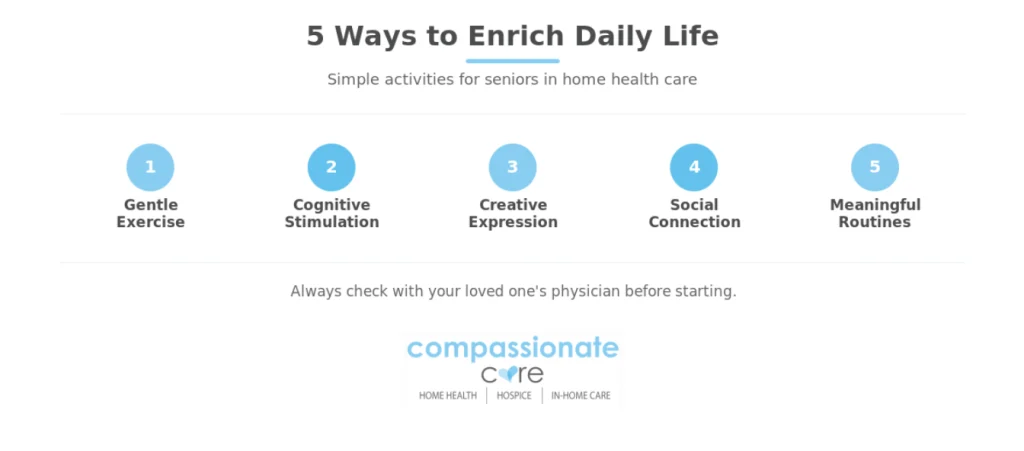
Activity 1: Gentle Physical Exercise
Exercise doesn’t just help the body build strength and stamina, it also helps your mind. Regular movement, spending time outdoors, and feeling accomplished can all provide a beneficial boost in someone’s mood.
Some examples of gentle physical exercise to consider incorporating into your or your loved one’s daily routine can include:
- Chair Yoga: Yoga positions done in a seated position to help with flexibility, mobility, and calming the mind. There are many chair yoga classes and tutorials available online that you can choose from.
- Light Resistance Bands: Resistance bands help build strength and promote mobility. Light levels of resistance with more reps can provide a more manageable level of exercise.
- Short Walks: If your loved one is able to leave the house for short periods of time, a brisk walk around their neighborhood or a favorite place like a local park can help them get out of the house for a short while and move.
Before engaging in any physical activity of this kind, be sure to first receive clearance from your loved one’s medical provider. You can also speak with their physician and ask for additional recommendations to add more variety to the types of exercise they engage in.
Activity 2: Cognitive Stimulation
Keeping the mind active is just as important as keeping the body moving. Cognitive activities help sharpen memory, improve focus, and encourage mental engagement. For seniors, these activities can also help bring a break to the routine and give them something new and challenging to focus on, especially if their mobility is limited and physical exercise may be more difficult.
Some examples of simple cognitive stimulation to consider incorporating into your or your loved one’s daily routine can include:
- Puzzles and Games: Crossword puzzles, Sudoku, card games, or matching games
- Reading and Storytelling: Reading books, magazines, short articles, or telling stories from your past to someone else
- Music and Audiobooks: Listening to favorite music or engaging audiobooks can reduce stress, lift mood, and encourage imagination.
These activities should be consistent and enjoyable instead of time-consuming. Ask your loved one what they would enjoy doing, and support them in these activities.
Activity 3: Creative Expression
Everyone has a creative spark in them. Whether it’s a fond memory, the beauty of nature, or a hobby like playing music, there is a desire to create something that exists within all of us.
Encourage your loved one to engage in a creative activity that they enjoy or would like to try.
Examples can include:
- Painting, crafts, and drawing
- Writing and journaling
- Playing a musical instrument
- Knitting and crocheting
These activities can provide an emotional release and relieve stress for many. Focusing on enjoyment instead of results, personalization, and choice can also help make these activities more enjoyable.
If you’re deciding on creative activities, make sure to involve your loved one in that process. They should feel free to choose the form of expression that most appeals to them and gives them a sense of control in their life.
Activity 4: Social Connection
One of the most difficult aspects of home healthcare for some is the worries over reduced social connection. Your loved one may worry about not seeing their friends or family as much as they used to, not being able to attend the church or social organizations they belong to, or even share a meal with others as often as they liked.
Encourage your loved one to participate in social activities within their physical means while receiving home healthcare. If they are able to be out of the home for periods of time, offer to drive them to activities they enjoy.
Conversely, if they cannot leave the home, help them arrange visits from family and friends. You can also assist them in setting up virtual methods of communication with others, such as FaceTime or other video chatting options.
Activity 5: Meaningful Daily Routines
As people, we thrive on purpose, no matter how small. This holds true for seniors receiving home health care. Even small routines can provide a sense of structure and help maintain independence as well as a feeling of usefulness.
Imagine yourself as someone that spent their entire life working, having hobbies and activities that you enjoy, and caring for your friends and family. As you age, and your body loses its strength and stamina it once had, it can be difficult to still feel important or valued in your own mind.
As we know, it couldn’t be further from the truth. Senior-aged adults continue to provide immense value as they age and share their experiences with younger generations.
Providing someone with a feeling of purpose as they age can be transformative in their happiness and wellbeing. Here are some simple ideas that they can incorporate into their daily routines:
- Gardening: From growing their own fruits and vegetables to simply watering plants, being outside and mobile can make a real difference.
- Caring for a pet: Animals need love, affection, and care. For someone who is mostly staying at home, a companion like a cat or small dog can help them feel a sense of purpose as a caretaker.
- Engaging in faith-based activities: If your loved one adheres to a faith system, encouraging them to pray, meditate, or attend a virtual religious service can help provide community and comfort in a context that matters to them.
Encouraging routines like these reinforces that life still holds purpose and opportunities to make a positive impact, no matter how small the action may seem. Over time, these activities can help seniors feel more engaged, independent, and fulfilled in their daily lives.
It’s About Quality Time and Quality of Life
Ultimately, focusing on enhancing the quality of life for your loved one and giving them opportunities to spend more quality time with others that matter to them is what is most important. Make sure that you listen to your loved one, involve them in planning activities, and check in with their doctors to ensure that they are able to engage in the activities that they want to do so safely while continuing their home healthcare journey.
If you are seeking home healthcare in California, contact our team at Compassionate Care today. Our home healthcare professionals prioritize your loved one’s wellbeing, dignity, quality life, and ability to spend quality time with their loved ones.

Get Started Today
Take the first step
with compassionate care.
Confidential, compassionate support, one call or click away.
Get Started
Tell us about your loved one's needs and we'll reach out right away.